Why Teaching Kids to Say 'Yes, And' Could Be the Best Thing You Do for Their Social Life
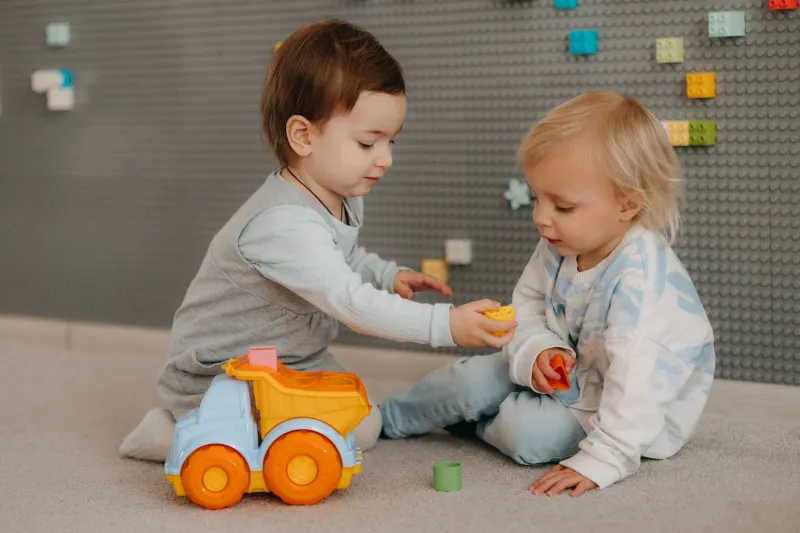
Picture two kids playing together. One says, "Let's pretend this couch is a spaceship!" The other says, "No, that's dumb. It's just a couch." And just like that — the whole game collapses before it even gets off the ground.
Now rewind. Same two kids. Same couch. But this time, the second kid says, "Yes! And we're heading straight for the moon, but we're almost out of fuel!" Suddenly there's a mission, a problem to solve, and two little astronauts completely absorbed in a world they built together.
That tiny shift — from "no" to "yes, and" — is the foundation of something child development researchers and classroom teachers have been paying close attention to for years. And if you want to raise a kid who's good at friendship, teamwork, and rolling with life's curveballs, this is one of the most powerful habits you can help them build.
Where This Idea Actually Comes From
The "Yes, And" principle is a cornerstone rule in improv comedy. Performers are trained never to shut down what their scene partner introduces. Instead, they accept it as true and add something new. The result? Scenes that go somewhere unexpected and wildly creative — because everyone's building on the same foundation instead of tearing it down.
But here's what's interesting: the same dynamic plays out on every playground, in every classroom group project, and around every kitchen table where siblings are trying to invent a game together. Kids who naturally operate with a "yes, and" mindset tend to be easier to collaborate with, more fun to be around, and better at navigating the social friction that comes with, well, being a kid.
It's not about agreeing with everything. It's about choosing to engage with an idea before deciding where it goes next.
What Happens in a Kid's Brain During Collaborative Play
When children play together and build on each other's contributions, a lot is happening beneath the surface. They're practicing what psychologists call "joint attention" — the ability to share a focus with someone else and respond to what that person brings to the table. This is a foundational social skill that shows up everywhere from kindergarten circle time to high school group projects.
Kids who develop strong joint attention skills tend to have an easier time making and keeping friends. They're better at reading social cues, more willing to compromise, and less likely to bulldoze conversations with their own agenda.
There's also an emotional regulation piece here. Saying "yes, and" requires a kid to put their own idea on hold — even for just a second — to make space for someone else's. That pause? It's actually a tiny act of empathy. Over time, practicing it regularly builds the kind of emotional flexibility that helps kids handle disappointment, navigate conflict, and recover from the inevitable moments when things don't go their way.
The "No, But" Reflex and Why Kids Default to It
Here's the thing: shutting ideas down is actually the easier move, especially for younger kids. When a child says "no" to a peer's suggestion, they're protecting their own vision. They know what they want the game to be, and someone else's idea feels like a threat to that plan.
This is completely developmentally normal, especially in the preschool and early elementary years when kids are still figuring out that other people have inner lives, preferences, and creative visions just as valid as their own. The "no, but" reflex isn't a character flaw — it's a starting point.
The goal isn't to eliminate a child's opinions or preferences. It's to expand their toolkit so they have more than one way to respond when someone brings something unexpected to the table.
How This Shows Up in School (More Than You'd Expect)
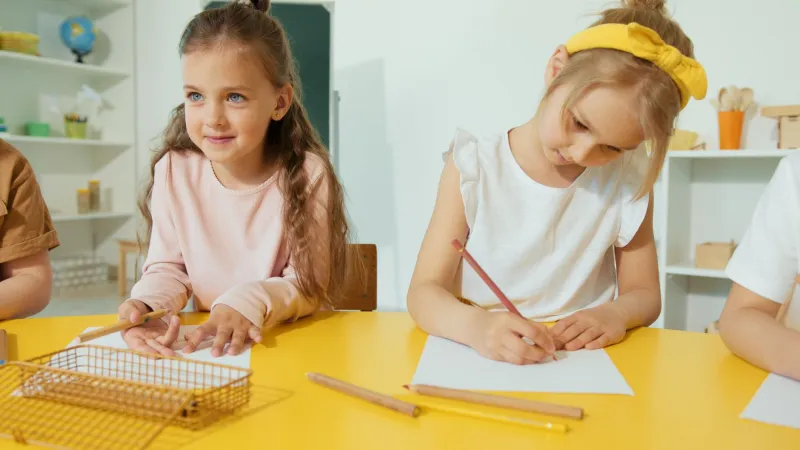
Ask any elementary school teacher about group work, and you'll probably hear a sigh. Group projects are notoriously tricky, not because kids don't have good ideas, but because they struggle to combine those ideas into something everyone can get behind.
The "yes, and" mindset is essentially a collaboration superpower. Kids who've practiced it at home tend to be the ones who can hear a classmate's idea, find something worth building on in it, and add their own contribution without making the other kid feel dismissed. That's a rare skill, and teachers notice it.
It also shows up in academic discussions. A child who knows how to say "I like that idea, and what if we also..." is a child who knows how to think with other people — not just next to them.
Simple Ways to Practice This at Home
The good news is you don't need any special equipment or a background in improv comedy to start weaving this into everyday life. A few easy approaches:
Story-building games. Take turns adding one sentence to a story. The rule: you have to accept whatever the previous person said and keep going. "Once there was a dragon." "Yes, and the dragon was afraid of butterflies." "Yes, and one butterfly had been following him for three years..." Kids love this, and it naturally builds the "yes, and" habit without feeling like a lesson.
Model it out loud. When your kid shares an idea — even a slightly chaotic one — try responding with genuine curiosity before redirecting. "Oh, you want to build a fort in the kitchen? Yes! And maybe we could..." You're showing them what it looks and feels like to be on the receiving end of that kind of response.
Debrief after group play. When your child comes home frustrated from a playdate or group activity, try asking: "Was there a moment when someone's idea didn't get used? How did that feel?" These conversations build awareness without being preachy.
Play "add-on" drawing. One person draws something, the next person adds to it without erasing anything. It's a visual version of "yes, and" that younger kids especially find hilarious and surprisingly compelling.
It's About More Than Play
Here's the bigger picture: a child who learns to engage with other people's ideas — to find the spark in them before deciding what to do next — is developing a habit of mind that will serve them for life. In friendships, in classrooms, in future workplaces, and in every relationship they'll ever have, the ability to say "yes, and" is really the ability to say I see you, and I want to build something with you.
That's not a small thing. That might actually be one of the most important things.
So next time the couch becomes a spaceship? Buckle up and see where it goes.