Why Kids Who Dawdle Before Starting Might Actually Be the Most Creative Thinkers in the Room
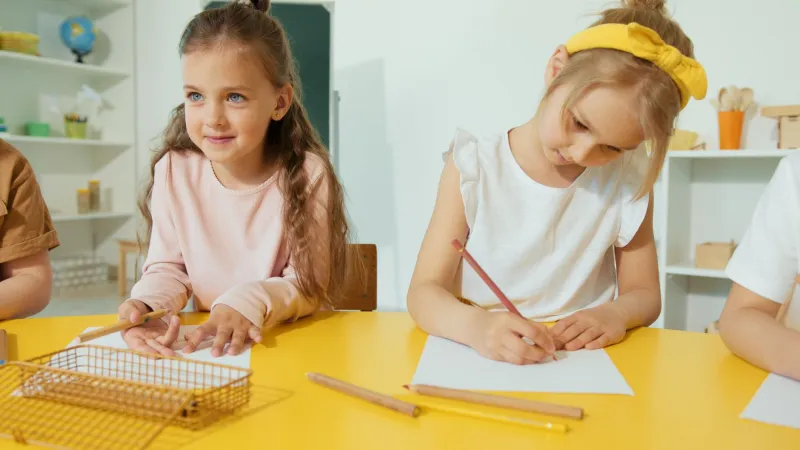
It's Sunday afternoon. The book report is due tomorrow. And your child is sitting at the kitchen table — not writing, not even close — but carefully sorting their markers by color, sketching little stars in the corner of a blank page, and quietly humming to themselves.
Every parent instinct kicks in: Get to work. Stop stalling. You're wasting time.
But what if that "wasting time" is actually the work? What if your kid's brain is doing something genuinely useful — something that'll make the final product better — precisely because they haven't started yet?
Turns out, the science backs this up in a pretty surprising way.
Not All Procrastination Is Created Equal
Here's the thing most adults don't realize: procrastination isn't one single behavior. Researchers who study creativity and cognition have started drawing a clear line between two very different types.
The first is avoidance procrastination — the kind where a kid is genuinely dodging a task because it feels overwhelming, scary, or just plain boring. This is the type that leads to a rushed, half-hearted effort at 9 p.m. the night before a deadline.
The second is something researchers call incubation or, more casually, productive procrastination. This is when a child delays the main task by doing something adjacent — organizing their workspace, sketching rough ideas, flipping through related materials, or just letting their mind wander around the edges of the problem.
These two behaviors can look almost identical from the outside. But inside that little brain? They're worlds apart.
What's Actually Happening in the Brain
Neuroscience gives us a fascinating window into why this pre-task phase matters so much for kids.
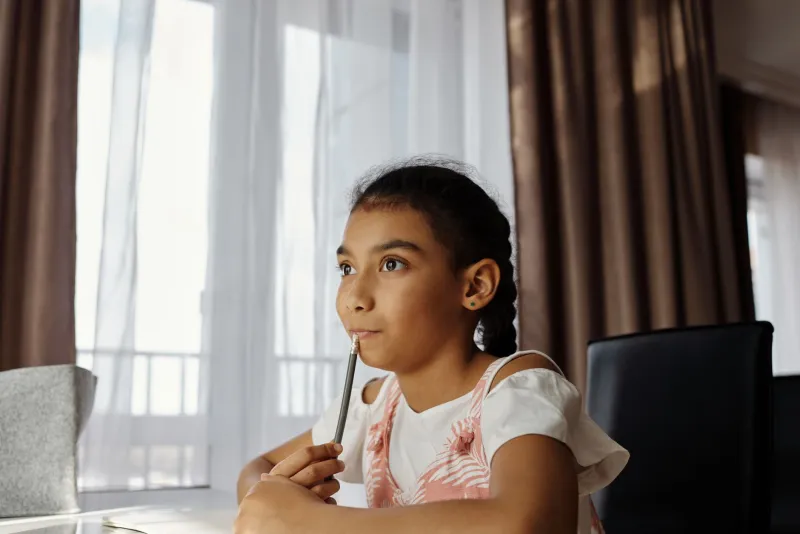
When children aren't actively focused on solving a problem, the brain doesn't just go quiet. Instead, something called the default mode network kicks in — a set of brain regions that light up during daydreaming, mind-wandering, and loosely structured thinking. This is the same network associated with imagination, self-reflection, and creative connection-making.
In other words, the brain in "idle" mode is actually busy linking ideas, pulling in memories, and playing with possibilities in ways that focused, linear thinking simply can't access.
For kids especially — whose brains are still building the neural pathways that support creative flexibility — this incubation time isn't a detour around learning. It's part of the road.
Studies on creative problem-solving have found that people who take breaks before tackling a task (especially breaks that involve low-demand, unrelated activity) consistently come up with more original ideas than those who dive straight in. Kids who fiddle with their supplies, make little sketches, or quietly putter around before starting often produce richer, more thoughtful work — not despite the dawdling, but because of it.
The Pencil-Sorting Phase Is Real (and Worth Respecting)
Let's talk about what productive procrastination actually looks like at the kitchen table, because it's easy to miss if you don't know what you're looking for.
Signs your kid is in productive pre-task mode:
- Arranging or organizing materials without being asked
- Doodling or sketching loosely related images
- Asking random "what if" questions about the topic
- Flipping through books or looking at pictures without reading closely
- Talking out loud to themselves or a pet about the subject
- Building something tangential with whatever's nearby
None of these look like "working." But each one is giving the brain low-pressure exposure to the task at hand, allowing ideas to surface naturally rather than being forced.
Compare that to avoidance procrastination, which tends to look more like:
- Completely switching topics (asking to play video games, watch TV, call a friend)
- Expressing strong negative emotion about the task ("I hate this," "I can't do this")
- Physically leaving the workspace repeatedly
- Showing no connection whatsoever to the assignment at hand
The difference is proximity — productive procrastinators stay in the neighborhood of the task even when they're not directly engaged with it.
How Parents Can Support (Without Rushing Things)
This is where it gets practical, because knowing the science doesn't automatically make it easy to watch your kid doodle for 25 minutes before writing a single sentence.
Give a soft time boundary, not a hard one. Instead of "You need to start right now," try something like, "We've got about an hour before dinner — take a few minutes to get settled, then let's see where you're at." This respects the pre-task phase without letting it stretch into the whole afternoon.
Ask curious questions instead of giving directives. "What do you think your project is really going to be about?" or "Is there anything you're still trying to figure out?" can gently nudge a child's brain toward the task without yanking them away from their natural warm-up process.
Notice what they're doing during the delay. If your kid is drawing pictures related to their report or lining up facts they already know, that's a good sign. If they've fully mentally checked out, a gentle redirect makes sense.
Resist the urge to fill the silence. One of the most powerful things a parent can do during this phase is simply... not interrupt. Incubation needs a little breathing room. Hovering or repeatedly asking "are you starting yet?" disrupts the very process you're trying to support.
When to Gently Step In
None of this means kids should never be redirected. If the pencil-sorting has turned into full-on avoidance — if your child is distressed, completely disengaged, or genuinely stuck — that's a signal they might need support breaking the task into smaller pieces, or a conversation about what feels hard.
The goal isn't to romanticize all delay. It's to get curious about what kind of delay you're seeing before jumping to "stop stalling."
A good rule of thumb: if the pre-task behavior seems calm, loosely connected to the assignment, and your kid seems generally okay, give it some space. If it's escalating into frustration or full avoidance, that's your cue to step in with a warm, low-pressure check-in.
The Bigger Lesson for Growing Minds
At Emily's Playground, we talk a lot about the value of giving kids space to think, explore, and discover things in their own way. Productive procrastination fits right into that philosophy.
The kids who learn that their brain needs a little runway before takeoff — and who aren't constantly rushed past that phase — grow into adults who trust their own creative process. They learn that good ideas don't always arrive on command. Sometimes they show up while you're sorting your colored pencils.
So next time your kid is sitting at the table, project untouched, seemingly doing a whole lot of nothing? Take a breath. Look a little closer.
Chances are, something pretty interesting is already underway.