Half-Finished and Totally Fine: What It Really Means When Your Kid Drops a Project
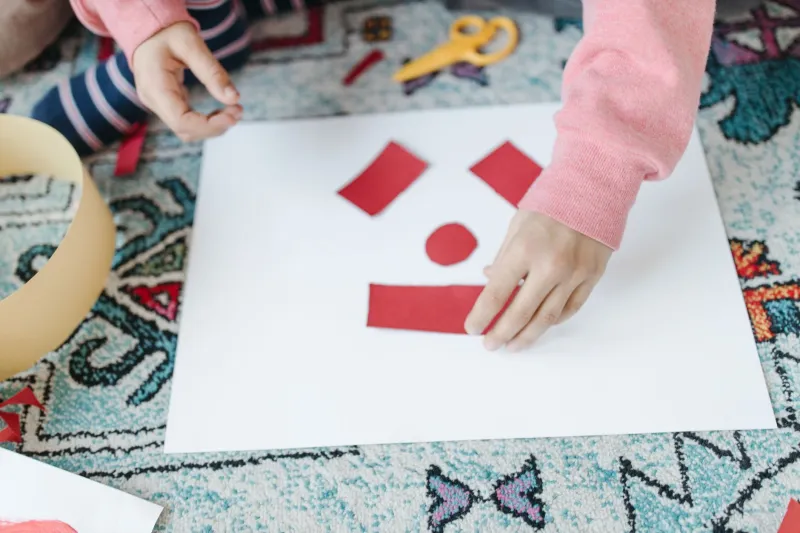
It's a scene pretty much every parent knows by heart. Your child begs for the glitter glue and the poster board, swears up and down they're going to make the most amazing butterfly garden diorama ever created, and attacks the project with the kind of energy usually reserved for birthday parties. Then, somewhere between the second wing and the cotton ball clouds, they wander off. Just like that, the butterfly garden is abandoned on the kitchen table, and they're now deeply invested in teaching the dog a new trick.
Cue the parental sigh.
But here's the thing — that pivot your kid just made? It might actually be one of the smartest things they've done all week.
What's Really Going On Inside That Busy Brain
When children shift gears mid-project, adults tend to read it as a lack of focus, laziness, or even a sign that something needs to be "worked on." But child development researchers have a pretty different take. What looks like giving up is often the brain doing exactly what it's supposed to do at this stage of life.
Young kids are wired to explore broadly rather than dig deep. Their brains are in a massive growth phase, constantly building new neural connections, and the best way to do that isn't to master one thing — it's to touch a whole lot of things. Jumping from the diorama to the dog training isn't distraction. It's sampling. It's the cognitive equivalent of walking through a buffet and tasting a little of everything before deciding what you actually love.
Developmentally, this kind of behavior is tied to something called cognitive flexibility — the brain's ability to shift between ideas, adapt to new information, and approach problems from different angles. Kids who move fluidly between activities are actually exercising this skill every single time they pivot. And cognitive flexibility, it turns out, is one of the strongest predictors of creative thinking and problem-solving later in life.
The Difference Between Quitting and Exploring
Not every abandoned project is created equal, and it helps to know what you're actually looking at.
There's a difference between a kid who walks away because they hit a frustrating wall and a kid who walks away because their curiosity just got pulled in a new direction. The first situation might call for a little gentle encouragement — helping them work through the stuck feeling rather than escape it. The second? That's exploration in action, and it usually doesn't need fixing at all.
Some signs your kid is exploring rather than quitting:
- They seem energized and engaged with the new activity, not defeated
- They talk excitedly about what they're doing next
- They revisit the original project later, often with fresh eyes
- The shift feels natural rather than avoidant
On the other hand, if your child seems frustrated, deflated, or is consistently walking away the moment things get hard, that's a different conversation — one about building resilience and sticking power, which is also worth having, just separately.
When to Encourage Follow-Through (and When Not To)
Here's where a lot of parents get tripped up: the instinct to teach kids to "finish what they start" is a good one at its core, but it can get applied way too broadly.
Follow-through absolutely matters — when there's a commitment to someone else involved (a school project with a deadline, a team that's counting on them), or when your child has expressed a genuine goal they want to reach. In those cases, helping them push through the hard middle part is genuinely valuable.
But for self-directed creative play? The rules are different. When a kid is playing and exploring on their own terms, the process is the point. There's no finish line that needs crossing. The half-built rocket ship taught them about spatial reasoning. The two butterfly wings taught them about symmetry and patience. The fact that neither got "done" doesn't erase any of that learning.
A good rule of thumb: save the follow-through conversations for situations where completion actually matters to your child or to someone else. Let the rest just be what it is — rich, messy, wonderful exploration.
Creating a Home Where Unfinished Is Okay
One of the most powerful things you can do as a parent is shift the culture around projects in your house. When kids feel like an unfinished project is a failure, they start avoiding ambitious ones altogether. Why start something big if not finishing it means you've let someone down?
Instead, try treating in-progress work as exactly that — work in progress. Here are a few small shifts that make a big difference:
Give projects a home, not a deadline. Set up a designated shelf, bin, or corner where in-progress creations can live without being in the way. When the rocket ship has a spot, it doesn't feel abandoned — it feels like it's waiting.
Talk about your own unfinished things. Kids take huge cues from adults. If you mention that you started learning to knit last winter and you're still figuring it out, or that you've been slowly working on a puzzle for weeks, it normalizes the idea that things don't have to happen all at once.
Celebrate the pivot out loud. When your kid moves on to something new, try saying something like, "Oh wow, what made you want to try that?" instead of "But you didn't finish your project." That one small language shift communicates that their curiosity is something to be proud of.
Ask about what they learned, not what they made. After a session of creative play — finished or not — try asking, "What was the coolest part of what you were working on?" It reinforces the idea that the value was in the doing, not just the end result.
The Long Game
Here's the bigger picture worth holding onto: kids who are given the freedom to explore, pivot, and leave things unfinished without shame are more likely to take creative risks as they get older. They're more likely to try new things, because they haven't learned to fear the possibility of not finishing. And they're more likely to eventually find the things they love deeply enough to see all the way through.
The half-finished butterfly garden isn't a problem to solve. It's evidence that your kid is doing exactly what kids are supposed to do — reaching out in every direction, tasting everything, figuring out who they are and what lights them up.
At Emily's Playground, we're big believers that the best learning rarely looks tidy from the outside. Sometimes it looks like glitter glue drying on a table while a kid has moved on to something even better. And that's not just okay — that's the whole beautiful point.