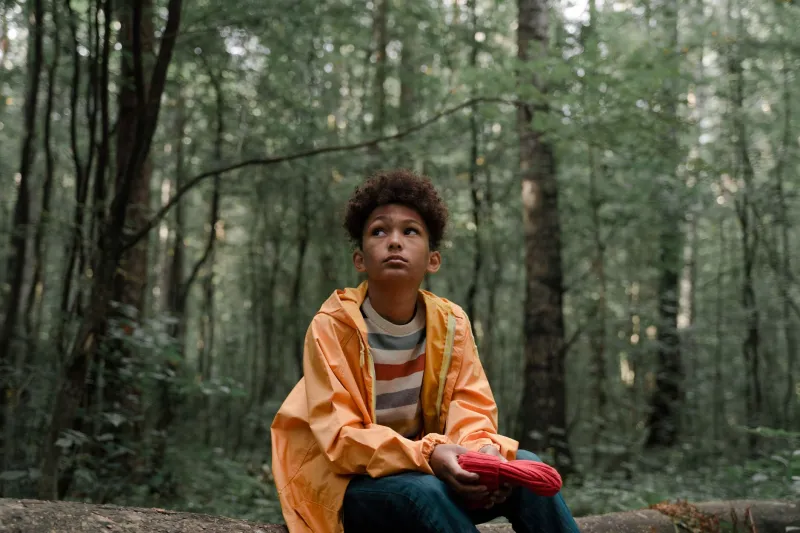
Why Your Kid's 'Stalling' Might Actually Be Genius in Disguise
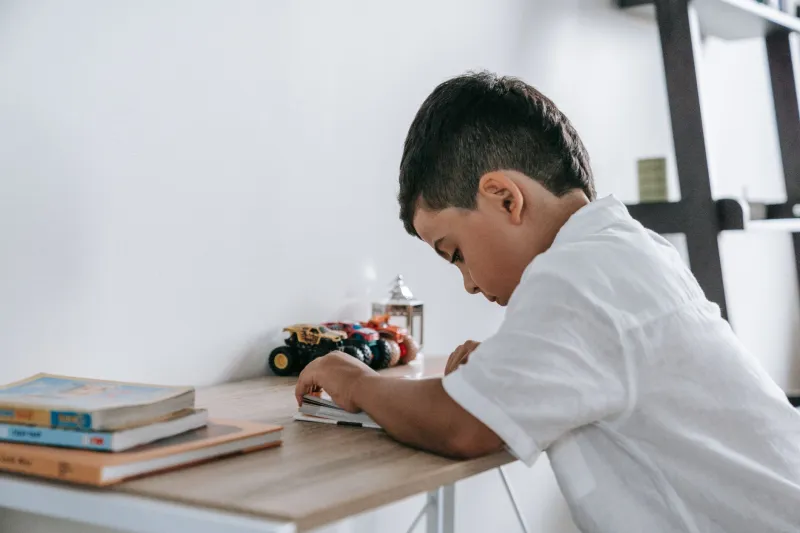
Picture this: your kid has a book report due tomorrow. You check in after twenty minutes, and instead of a Word doc in progress, you find them sprawled on the floor constructing an elaborate marble run. Your first instinct? Redirect, remind, maybe raise your voice a little.
But hold on. Before you pull the plug on that marble run, there's something worth knowing — something researchers have been quietly piecing together for years. That detour your child just took? It might be exactly what their brain needed.
The Brain's Secret Workshop
Here's where it gets genuinely interesting. When kids (and adults, for that matter) stop actively focusing on a task, a specific set of brain regions kicks into gear. Neuroscientists call it the default mode network, or DMN. It's most active during daydreaming, free play, and those in-between moments when the mind is technically "doing nothing."
But the DMN isn't idle. Far from it. It's busy making connections — linking unrelated ideas, replaying experiences, and quietly problem-solving in the background. Think of it like a browser tab running in the background while you're working on something else. You're not watching it, but it's processing.
For kids especially, this background processing is powerful. Their brains are still building the neural scaffolding that supports creative thinking and flexible problem-solving. When they step away from a structured task and shift into unstructured play, they're not just killing time — they're giving that scaffolding a real workout.
Not All Procrastination Is Created Equal
Now, let's be real. Not every instance of your kid avoiding homework is a creative breakthrough waiting to happen. There's a meaningful difference between two types of delay, and learning to spot them makes all the difference.
Avoidance procrastination is what most parents recognize immediately. It comes with frustration, maybe some tears, a lot of "I don't want to" energy. The child isn't engaged in anything particularly absorbing — they're just resisting. This kind of stalling often signals anxiety, confusion, or a skill gap that needs some support.
Incubation procrastination looks totally different. The kid isn't stuck — they're absorbed. They've wandered into something that genuinely captures their attention: building, drawing, making up stories with action figures, experimenting with slime in the kitchen. Their body language is relaxed. They're not avoiding the task so much as temporarily parking it while their brain does some behind-the-scenes work.
The marble run kid? Probably incubating. The kid hiding under a blanket insisting they "can't" write a single sentence? That one might need a different kind of help.
What the Research Actually Shows
A now-famous study out of the University of California, Santa Barbara found that people who took breaks involving unrelated, low-demand activities performed significantly better on creative tasks afterward compared to those who either kept grinding or rested completely. The sweet spot was doing something different — something that let the mind wander without demanding focused attention.
For kids, this translates beautifully. A child who steps away from a science project to shoot hoops in the driveway, or who takes a break from a math worksheet to mess around with watercolors, often returns with a clearer head and — sometimes — a surprisingly fresh approach to the original problem.
One parent in an online parenting forum described her daughter coming back to a stalled creative writing assignment after thirty minutes of playing with the family dog. "She sat down and just wrote," the mom said. "Like the block was gone. I genuinely couldn't explain it."
The DMN could.
How to Create Space for the Good Kind of Wandering
So how do you, as a parent, encourage the productive kind of procrastination without accidentally giving a green light to full-on avoidance? A few practical approaches:
Build in official brain breaks. Instead of expecting your child to power through a task start to finish, try a structured pause. "Work for twenty minutes, then take a ten-minute break to do whatever you want." This reframes the detour as intentional rather than sneaky, which also removes some of the guilt kids (and parents) attach to it.
Keep a "tinker corner" accessible. Low-stakes creative materials — LEGOs, sketchpads, kinetic sand, a bin of random craft supplies — give kids a go-to destination during mental detours. The key is that these activities are open-ended. There's no right answer, no performance pressure. That's exactly the environment the default mode network thrives in.
Ask, don't assume. When you notice your child has gone off-script, try a curious check-in instead of an immediate redirect. "Hey, how's the project going? Do you feel stuck or just taking a breather?" You might be surprised how self-aware kids are about their own mental state when given the chance to articulate it.
Watch for the return. One of the clearest signs of productive procrastination is that kids come back to the task on their own, often with noticeably more energy or ideas. If you keep a loose eye on the pattern, you'll start to recognize your own child's creative rhythm.
When to Actually Step In
None of this means deadlines are optional or that avoidance should go unchecked. If a child is consistently unable to start tasks, seems overwhelmed by the scope of assignments, or uses "creative breaks" as an indefinite escape hatch, that's worth a deeper conversation — and possibly a chat with a teacher or counselor.
The goal isn't to romanticize every detour. It's to approach the wandering brain with curiosity rather than frustration, and to recognize that the path to a good idea isn't always a straight line.
The Bigger Picture
At Emily's Playground, we talk a lot about how play isn't the opposite of learning — it is learning. The same principle applies here. A kid who learns to trust their own mental rhythms, who figures out that stepping away sometimes brings them closer to a solution, is building something that will serve them long after the book report is forgotten.
They're learning to work with their brain instead of against it. And honestly? That's a skill a lot of adults are still trying to figure out.
So next time you walk in on a marble run situation, take a breath before you redirect. Ask yourself: is this avoidance, or is this a brain doing exactly what it needs to do?
Sometimes the most productive thing a kid can do is play.