Why 'What If?' Is the Most Powerful Question Your Kid Can Ask
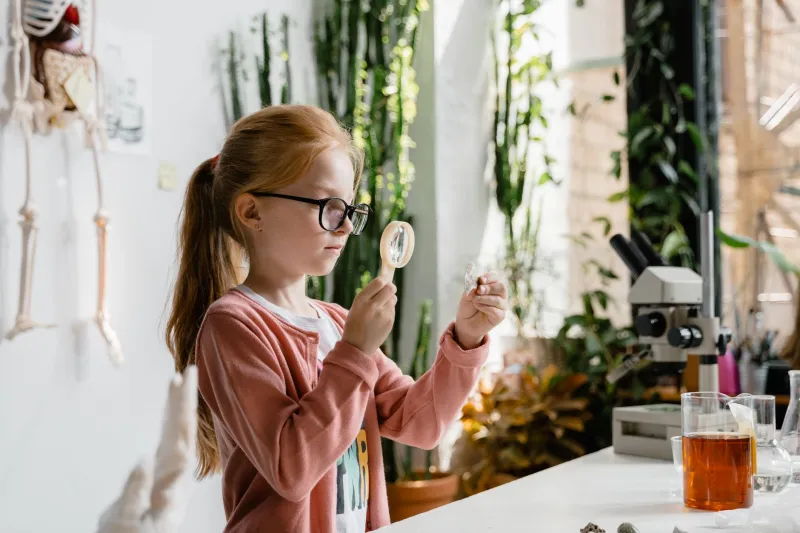
Picture this: your kid is crouched over a puddle in the backyard, dropping rocks, sticks, and a handful of leaves into the water. They're not following instructions. Nobody gave them a worksheet. They're just... wondering. What sinks? What floats? What happens if I drop this big rock really fast?
To a passing adult, it might look like goofing around. But what's actually happening in that moment is some of the most sophisticated learning your child will ever do.
This is what researchers and child development specialists sometimes call curiosity-driven play — and it turns out, it's a pretty big deal.
The Science Behind the 'What If?' Brain
Children are wired to ask questions. From the time they can point at things and babble, kids are essentially running experiments on the world around them. But somewhere along the way — between structured school days, scheduled activities, and screen time — that natural drive to hypothesize and test can get quietly squeezed out.
Research from Harvard's Center on the Developing Child shows that the neural pathways built during open-ended exploration are some of the strongest and most flexible the brain develops. When a child asks "what if I mix these two colors?" or "what happens if I build the tower taller than me?" and then tries it, they're not just playing. They're practicing the full scientific method: observe, hypothesize, test, reflect.
Dr. Alison Gopnik, a developmental psychologist at UC Berkeley, has written extensively about children as "the R&D department of the human species." Her research suggests that young children are actually better at certain kinds of creative problem-solving than adults, precisely because they haven't yet learned to filter out "unlikely" possibilities. That wild, unpredictable thinking? It's a feature, not a bug.
What Curiosity-Driven Play Actually Looks Like
Here's the thing — curiosity-driven play doesn't require a special kit or a trip to a science museum (though those are great too). It shows up in the most ordinary moments.
At the playground: A kid who keeps jumping off the same step but gradually moves to a higher one isn't being reckless — they're testing variables. How high is too high? What changes when I land with my knees bent versus straight? They're doing biomechanics, basically.
In the kitchen: Give a five-year-old a bowl of water, some salt, and a few random objects from the junk drawer, and watch what happens. They'll make predictions. They'll be wrong. They'll try again. That cycle of guess-test-revise is the heartbeat of scientific thinking.
During pretend play: When kids build elaborate imaginary worlds — complete with rules, consequences, and plot twists — they're constantly asking "what if?" What if the dragon is actually friendly? What if the castle floods? This kind of narrative experimentation builds flexible thinking and emotional intelligence at the same time.
With building materials: Blocks, cardboard boxes, couch cushions — open-ended building invites kids to engineer solutions to self-invented problems. The tower keeps falling? That's not failure. That's data.
Why Predetermined Outcomes Get in the Way
Here's where a lot of well-meaning parents and educators accidentally hit the brakes on curiosity. When we hand a kid a craft kit with step-by-step instructions, or redirect their experiment because it's getting messy, or jump in with the answer before they've had a chance to struggle — we're essentially telling them: the destination matters more than the journey.
But in curiosity-driven play, the journey is the point.
Child psychologist Dr. Peter Gray, author of Free to Learn, argues that when children control the direction of their own play — including the freedom to fail, restart, and go completely off-script — they develop intrinsic motivation that carries into adulthood. Kids who learn to tolerate not-knowing, and who feel safe enough to keep exploring anyway, grow into adults who don't freeze when they hit an unexpected problem.
In other words, the kid who spent an afternoon figuring out why their paper boat kept sinking is better prepared for a tough work meeting at 35 than the kid who only ever followed the instructions on the box.
How to Cultivate the 'What If?' Mindset at Home
You don't need to overhaul your whole parenting approach. Small shifts make a big difference.
Ask questions instead of giving answers. When your kid gets stuck, resist the urge to solve it for them. Try "hm, what do you think would happen if you tried it a different way?" or even just "that's interesting — why do you think that happened?" You're not withholding help; you're handing them the tools to find it themselves.
Create low-stakes experiment zones. Designate a corner of the yard, a tray on the kitchen counter, or even just a spot on the floor where mess is allowed and outcomes don't matter. Call it the "testing zone" or the "discovery spot" — whatever your kid thinks sounds cool. The label itself signals: here, it's okay to not know what's going to happen.
Celebrate the wrong answers. This one's huge. When a hypothesis doesn't pan out, treat it like exciting news. "Oh wow, that's NOT what we expected — so what does that tell us?" Reframing mistakes as information (rather than failure) is one of the most powerful things you can do for a child's developing mind.
Step back at the playground. Next time your kid is deep in some elaborate, slightly chaotic game with the other kids, try watching instead of directing. Notice what problems they solve on their own. You might be surprised.
Read books that ask questions. Picture books and early readers that end with open questions — or that follow characters who are curious and persistent — quietly model the 'what if?' mindset. Bonus: it gives you great conversation starters.
The Bigger Picture
We're raising kids in a world that moves fast and changes constantly. The skills that will serve them best — adaptability, creative problem-solving, comfort with uncertainty — aren't things you can drill into them with flashcards. They're built in the spaces where kids are free to wonder, mess up, and try again.
So the next time your kid is staring at a puddle, poking at an anthill, or asking you "but why does that happen?" for the fourteenth time today — take a breath and lean in. That question is the beginning of everything.
At Emily's Playground, we believe every kid has a scientist inside them. Sometimes all it takes is a little room to ask what if?