Boredom by Design: How Giving Kids Empty Time Builds Real Confidence
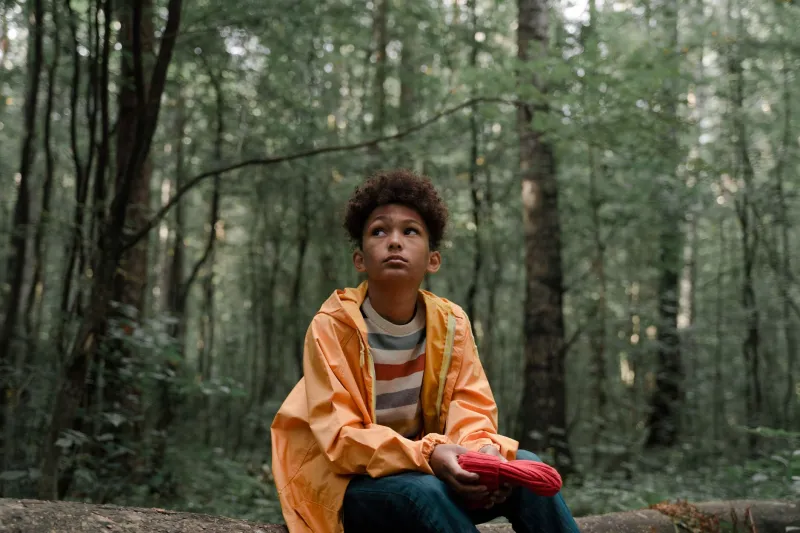
It's a Tuesday afternoon. The snack is eaten, the homework is done, and your kid is sprawled across the couch making a sound that could only be described as dramatic suffering. "There's nothing to dooooo."
Your instinct? Fix it. Fast.
But here's the thing — that uncomfortable, restless, wide-open moment? It might be exactly what your child needs most.
At Emily's Playground, we talk a lot about learning through play. But there's a quieter, less celebrated kind of growth that happens before the play even starts — in the gap between boredom and action. That gap, it turns out, is where confidence is quietly being built.
Not All Boredom Is Created Equal
Before we go any further, let's be honest: boredom isn't always productive. There's a real difference between the kind that sparks something and the kind that just spirals into frustration or screen-grabbing.
Destructive restlessness looks like escalating irritability, picking fights with siblings, or melting down because nothing feels right. This kind of boredom isn't doing much for anyone. It usually signals something else — hunger, overtiredness, emotional overload, or a genuine need for connection.
Generative boredom, on the other hand, has a different texture. It starts with that same flat, "I don't know what to do" energy, but if left alone (and gently supported), it tends to evolve. Kids start poking around. They pick something up, put it down, drift toward a corner of the house, and eventually — sometimes slowly, sometimes suddenly — they find their way into something.
That process of self-directed discovery? That's not just entertainment. That's the foundation of intrinsic motivation, creative problem-solving, and genuine self-confidence.
Why We're So Afraid of the Empty Afternoon
American family culture has quietly normalized the idea that a well-loved kid is a scheduled kid. Soccer practice, coding camp, music lessons, playdates, enrichment classes — the calendar fills up fast, and it fills up with good intentions.
But when every hour has a purpose assigned by an adult, kids lose practice at the skill of generating purpose for themselves. And that skill — figuring out what you want to do, and then going and doing it — is enormously tied to confidence.
When a child learns to move from "I'm bored" to "I made something," they get a hit of genuine accomplishment that no structured activity can fully replicate. Because they did it. Nobody handed it to them.
A Simple Framework for Designing Unstructured Time
Intentional boredom isn't about ignoring your kid or clearing your schedule and hoping for the best. It's about setting conditions. Think of it like preparing a garden — you don't grow the plant, but you make sure the soil is ready.
1. Protect the time (and mean it)
Start small. One hour of genuinely unscheduled time, a few days a week. No planned activities, no suggestions from you, no screens as a default escape hatch. Let your child know that this time is theirs — no agenda, no product required.
It will feel awkward at first. For both of you.
2. Set up the environment, then step back
You don't need to do much here, but a little prep helps. Make sure art supplies, building materials, outdoor space, or books are accessible. Not presented, not prompted — just available. Kids are remarkably good at finding what they need when they're not being pointed toward it.
3. Resist the urge to fill the silence
This is the hardest part for most parents. When your child says "I'm bored," the culturally conditioned response is to offer something. Try not to. A simple "I bet you'll figure something out" goes a long way. It communicates trust — and trust is the seedbed of confidence.
4. Notice, don't narrate
Once your kid does find their way into something, let it breathe. Avoid hovering, commenting, or redirecting. Your job in this moment is to be nearby enough that they feel safe, but hands-off enough that the experience stays theirs.
Reading the Signals: Struggling vs. Processing
Here's the question every parent asks: how do I know when to step in?
It's a fair one. Because there's a real difference between a child doing the internal work of self-direction and a child who has genuinely hit a wall.
Signs they're processing (let it ride):
- Mild restlessness that shifts and changes
- Wandering, exploring, picking things up
- Quiet or low-level muttering — the brain is working
- Moving between spaces or materials without settling immediately
Signs they need support:
- Escalating distress that doesn't plateau
- Physical symptoms of overwhelm (crying, aggression, shutting down)
- Asking directly for help or connection — not just complaining, but reaching out
- A pattern of never being able to find their footing in free time, even after consistent practice
If you do step in, keep it light. "Want to sit together for a few minutes?" is different from "Let me find you something to do." You're offering presence, not a solution. That distinction matters.
What Confidence Actually Looks Like in These Moments
We tend to associate confidence with bold, visible things — raising a hand in class, performing on stage, making friends easily. But some of the deepest confidence is quieter than that.
It's the kid who can sit with discomfort and not panic. The one who looks at an empty afternoon and, after some fumbling around, finds a way to fill it on their own terms. The one who builds something, even if it falls apart, and tries again without being asked.
That kind of confidence — rooted in self-knowledge and self-trust — doesn't come from a class or a curriculum. It comes from practice. And boredom, designed well, is the practice ground.
One Last Thing
You don't have to get this perfect. You're not designing a psychological experiment — you're just leaving some room in the day. Some weeks it'll look messy and unimpressive. Your kid might spend their free hour reorganizing their sock drawer or narrating an elaborate story to a stuffed animal.
That's okay. Actually, that's great.
At Emily's Playground, we believe that kids are capable of way more than we give them credit for — especially when we get out of the way long enough to let them prove it. The empty afternoon isn't a problem to solve. It's an invitation your child is just waiting to accept.