Why Your Kid's Wandering Mind Is Actually Hard at Work
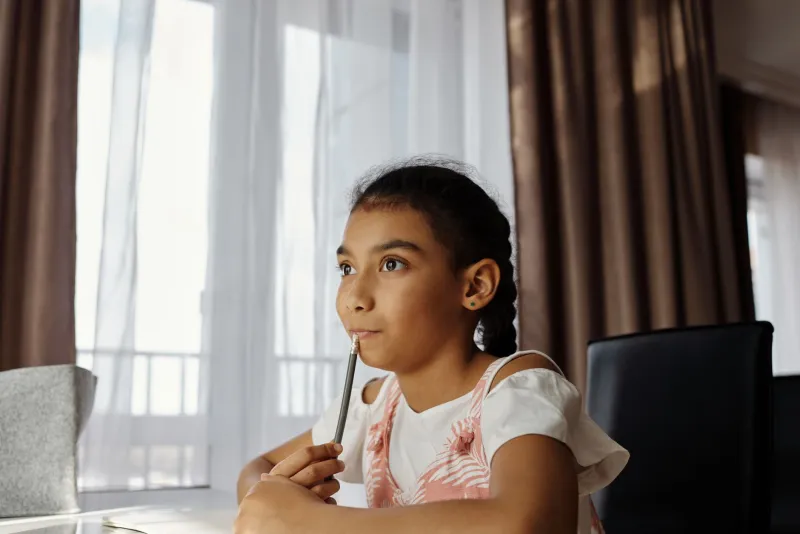
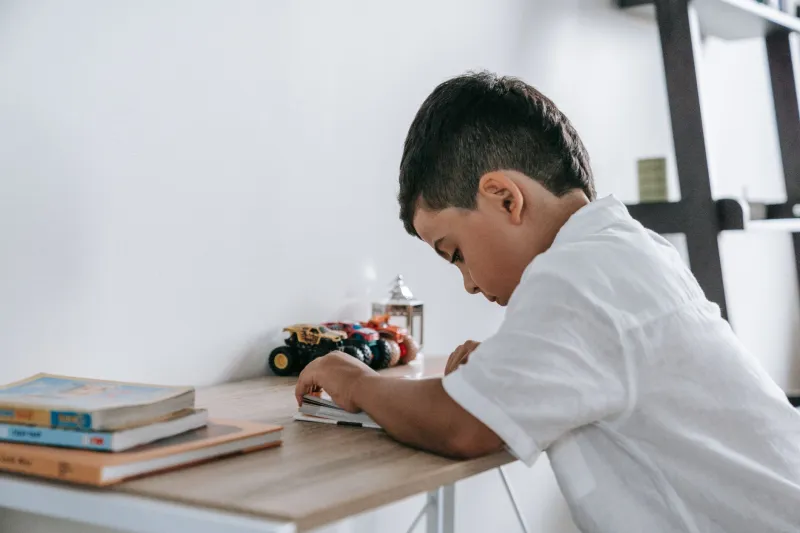
You've probably seen it a hundred times. You set your kid up at the kitchen table with a math worksheet or a book report, step away to refold laundry or answer an email, and come back to find them humming softly, spinning a pencil between their fingers, staring at the ceiling like it suddenly grew a mural. Not a single answer written down.
The frustrated parent response is pretty predictable: Come on, focus. You've been sitting there for twenty minutes.
But here's the thing — those twenty minutes might not have been wasted at all.
The Brain Doesn't Clock Out When It Looks Like It Has
Neuroscientists have spent a lot of time studying what they call the default mode network — a set of brain regions that light up not when we're focused on a task, but when we're not actively concentrating on anything in particular. For a long time, researchers assumed this network was basically the brain idling. Turns out, it's more like a background processor running a really complex program.
When kids (and adults) let their minds wander, the default mode network gets busy making connections between stored memories, half-formed ideas, and new information. It's essentially doing the creative legwork that focused, linear thinking can't always manage on its own. Some researchers describe it as the brain's internal brainstorming session — one that only gets started when you stop trying so hard.
So when your child is doodling little rockets in the margins of their science homework, their brain may actually be quietly assembling the conceptual framework they need to answer the questions on the page.
Avoidance vs. Incubation: They're Not the Same Thing
Now, to be fair, not every distraction is productive. There's a real difference between avoidance and incubation, and it's worth knowing how to spot which one you're dealing with.
Avoidance looks like a kid who's stressed, resistant, or anxious about a task and is finding ways to not engage with it at all. Their body language tends to be tense or defeated. They might ask to do something else entirely, complain that the work is too hard, or get visibly upset when redirected back to the task.
Incubation, on the other hand, tends to look more relaxed. The kid who's incubating is still loosely tethered to the problem — they haven't mentally checked out. They might be humming, fidgeting, or daydreaming, but they'll often circle back to the work on their own after a few minutes, sometimes with a new idea or a clearer sense of how to start.
Think of it like marinating chicken versus leaving it out on the counter and forgetting about it. One is doing something useful. The other is just a problem waiting to happen.
Why Some Kids Take the Long Way Around — and That's Okay
Every child has a different cognitive style, and some kids are natural incubators. They need to approach problems indirectly. They might need to talk about something unrelated, draw something, or move their body before they can settle into focused work. For these kids, the circuitous route isn't a detour — it is the route.
Research from creativity and cognition studies suggests that children who allow themselves a period of unstructured mental roaming before tackling a problem often generate more original solutions than those who jump straight in. The straight-line approach is efficient, sure. But efficiency and creativity don't always travel together.
This is especially worth keeping in mind for kids who tend to get labeled as distracted or unfocused. Sometimes the child who takes forever to start their homework is actually building something important in their head before they put pencil to paper.
What You Can Do (Without Getting in the Way)
So how do you support productive procrastination without accidentally enabling a kid who's genuinely avoiding work? A few ideas:
Give them a little buffer time. Instead of expecting immediate engagement, build in five to ten minutes of unstructured time before homework begins. Let them doodle, fidget with something, or just sit quietly. You're essentially giving their default mode network permission to do its thing before you ask for focused output.
Watch for the re-engagement. Kids who are incubating will often naturally drift back toward the task. If your child has been wandering mentally but suddenly picks up their pencil and starts writing, resist the urge to comment. Just let it happen.
Ask curious questions instead of corrective ones. Instead of Why haven't you started yet?, try What are you thinking about? You might be surprised. A lot of kids who look like they're spacing out are actually turning the problem over in their minds — they just can't always articulate it until you ask.
Let them move. Fidgeting and physical movement are closely tied to cognitive processing in children. A kid who needs to pace, bounce a leg, or squeeze a stress ball while they think isn't misbehaving — they're regulating. Movement keeps the brain activated in ways that sitting perfectly still sometimes doesn't.
Don't always rush the resolution. If a child is stuck on a problem, the impulse is often to jump in and help immediately. But giving them a bit of time to sit with the stuckness — to let the brain work on it quietly — can produce better outcomes than a quick fix. Think of it as trusting the process.
The Bigger Picture
We live in a culture that's pretty obsessed with productivity metrics, even when it comes to kids. Start-to-finish efficiency, no wasted steps, no idle moments. But children's brains aren't built for that kind of relentless linearity — and honestly, neither are adult brains.
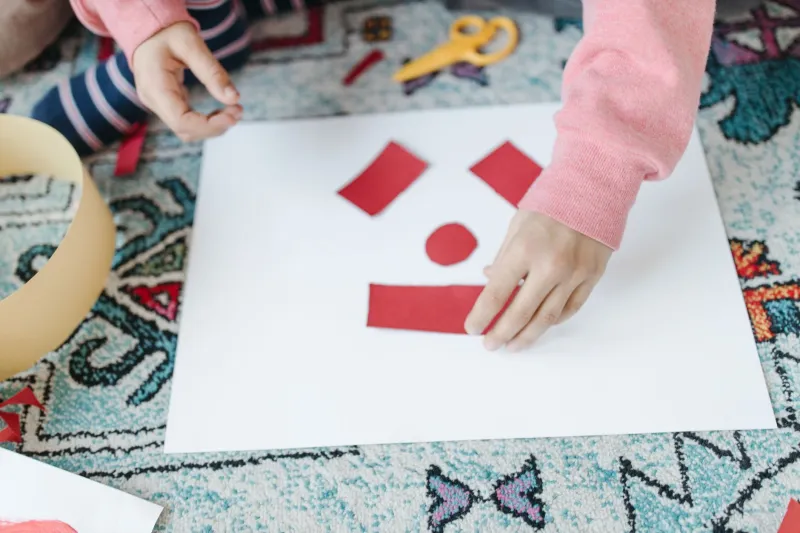
Some of the most creative problem-solvers in any classroom are the ones who look the least organized from the outside. The kid with the chaotic desk who suddenly announces a surprisingly elegant solution. The one who spent the first half of art class staring at a blank paper and then produced something completely unexpected in the second half.
At Emily's Playground, we're big believers in giving kids room to be messy, indirect, and wonderfully inefficient on their way to something great. Because sometimes the brain needs to wander before it can find its way.
So next time you catch your kid humming to themselves with a half-blank worksheet in front of them, take a breath before you say anything. There's a decent chance they're not wasting time.
They might just be getting ready to surprise you.