Why the Snack Break Is the Smartest Part of Your Kid's Day (And You're Probably Rushing Through It)
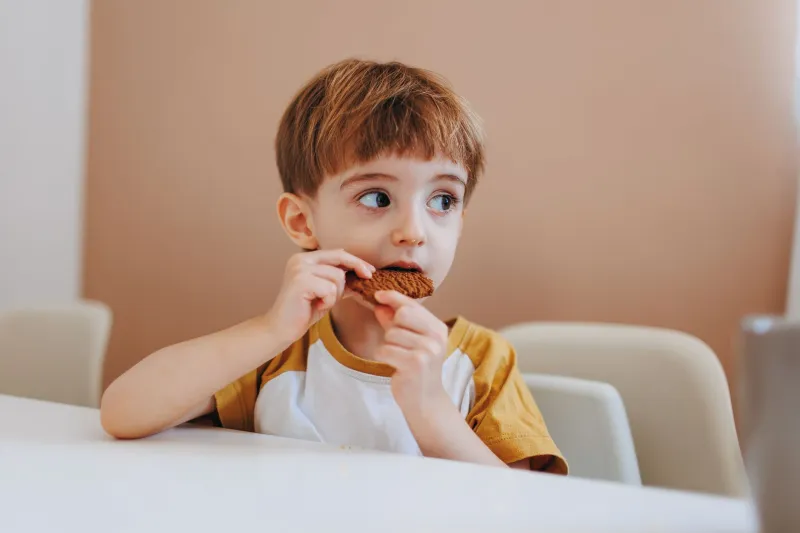
Picture this: your kid just wrapped up a 45-minute art session, and you're already mentally queuing up the next thing — maybe a reading game, maybe a nature walk, maybe that STEM kit gathering dust on the shelf. You call them to the kitchen, slide a plate of apple slices across the counter, and before they've even taken a bite, you're asking, "Okay, what do you want to do next?"
Sound familiar? You're not alone. Most of us treat the snack break like a pitstop — fuel up, get back on the track. But researchers who study how children's brains actually work have a different take. That unscheduled, low-pressure window between activities? It might be the most cognitively productive moment in your kid's entire afternoon.
What's Actually Happening Inside That Little Brain
When kids stop doing something focused and shift into a looser, more relaxed state — like sitting at the kitchen table eating crackers without an agenda — their brains don't go quiet. They shift gears.
Neuroscientists call this the default mode network (DMN), and it kicks in during exactly these kinds of in-between moments. Far from being "off," the DMN is associated with creative thinking, memory consolidation, self-reflection, and the ability to make unexpected mental connections. In plain English: your kid's brain is quietly doing some of its best work while they're chewing.
This is the same phenomenon behind those shower-thought breakthroughs adults swear by. The brain needs unstructured time to process, integrate, and generate. Children, whose brains are developing at a pace we'll never see again in their lifetimes, are especially primed to benefit from these low-demand windows.
When we rush kids from one activity directly into the next — even when both activities are genuinely fun and enriching — we're essentially skipping the processing phase. It's like reading a chapter of a book and immediately starting the next one without pausing to think about what you just read.
The Conversation That Only Happens at Snack Time
There's something else going on during these casual breaks that's harder to measure but just as real: connection.
Parents often report that their kids open up during the most mundane moments — in the car, while folding laundry together, or yes, during a quiet snack. Child psychologists have a name for this: "side-by-side" communication. When there's no direct eye contact pressure and no specific goal attached to the conversation, kids talk differently. They share more freely, ask bigger questions, and sometimes say the things they've been holding onto all day.
Scheduled "how was your day" conversations at the dinner table are great. But the random, "Hey, Mom, do you think dinosaurs were lonely?" question that comes out of nowhere while your kid is eating a handful of grapes? That's gold. And it only happens when there's enough breathing room to let it.
Why We Keep Filling the Gaps (And Why It Backfires)
Here's the honest truth: most parents overschedule not because they don't care, but because they care a lot. We want to give our kids every advantage. We've read the articles about enrichment and stimulation and the importance of early learning. So we fill the calendar.
But there's a paradox buried in all that good intention. The more tightly we pack a child's day, the less room there is for the mental wandering that actually fuels creativity and emotional processing. Kids who go from structured activity to structured activity without downtime in between often show signs of cognitive overload — they become irritable, less imaginative, and harder to engage even in the activities they normally love.
The snack break isn't just a break from activity. It's a reset for the whole system.
How to Actually Protect These Moments
This doesn't require a big overhaul of your family's routine. It's more about intention than schedule-restructuring.
Let the break be boring on purpose. Resist the urge to put on a show, hand over a tablet, or introduce a new topic. Let the snack break be genuinely low-stimulation. A plate of food, maybe some soft background noise, and space. That's it.
Follow their lead conversationally. If they want to talk, great — but let them start it. If they want to sit quietly and eat, let that happen too. The goal isn't to extract information or facilitate learning. The goal is to let their brain do what it naturally wants to do in a relaxed state.
Give it more time than you think it needs. Five minutes isn't really a break. Aim for 10 to 15 unrushed minutes between activities when you can swing it. It sounds like nothing, but it changes the texture of the whole afternoon.
Notice what comes after. Many parents who start deliberately protecting snack time report that their kids return to the next activity noticeably more engaged and imaginative. It can feel counterintuitive — like you're "wasting" time — right up until you see the difference.
Make the snack itself simple and familiar. This isn't the moment for a new food or a complicated recipe. Familiar, easy snacks keep the cognitive load low and let the brain stay in that relaxed, generative state. Think: cheese and crackers, fruit slices, a small bowl of cereal. Nothing that requires negotiation or decision-making.
The Bigger Picture
At Emily's Playground, we talk a lot about the value of play — but sometimes the most important play isn't a game or a craft or an activity at all. Sometimes it's a kid sitting at the kitchen counter, swinging their feet, eating a cheese stick, and staring out the window at nothing in particular.
That moment might look like nothing. But inside that quiet, the brain is connecting dots, replaying the morning, inventing a story, processing a feeling, or getting ready to ask you something that matters.
The best thing you can do is be there, slow down, and let it happen.
Some of the richest thinking in a child's day lives in the margins. The snack break is a margin. Protect it.