House Rules, Kid Edition: What Happens When Children Rewrite the Game
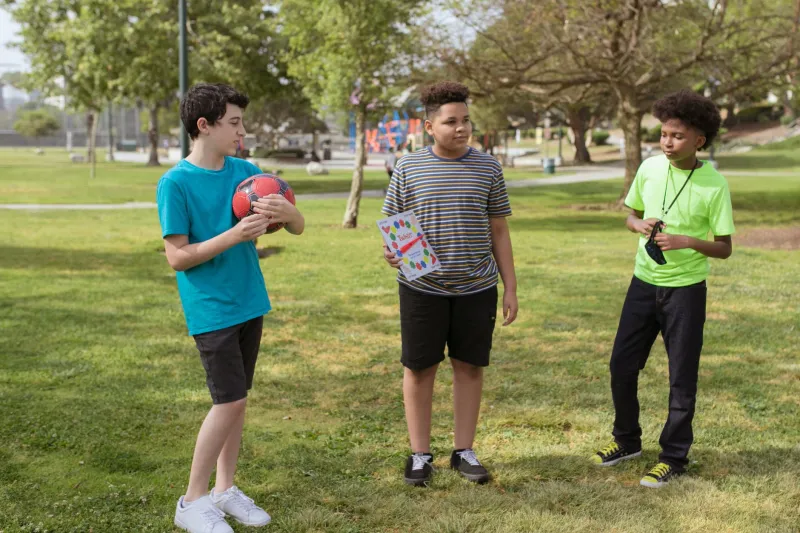
On a recent afternoon at a neighborhood park, a kid in a too-big hoodie stopped mid-kickball game and announced a new rule: if the ball rolls into the mulch, the kicker gets a bonus base. The other kids groaned, argued, huddled, and then—within ninety seconds—agreed. The game resumed. Nobody called a lawyer.
Adults often watch this kind of scene and see chaos. Or cheating. Or a pint-sized legislature gone rogue. But when kids invent and rewrite rules during play, they are doing something far more interesting than bending a game to their advantage. They are building a mind that can hold multiple perspectives, test an idea, and change course without falling apart. The rules are not getting in the way of the game. The rules are the game.
The 'That's Not Fair' Alarm (and Why It's Usually Wrong)
When a child says, 'That's not fair,' they are often not reporting a broken rule. They are reporting a broken feeling. Maybe they wanted a turn. Maybe they felt left out. Maybe the new rule would make them lose. Fairness, for young kids, is not a fixed legal code. It is a live negotiation between what I want, what you want, and what we can both live with.
That is why kid-made rules can look so strange from the outside. One round, the youngest player gets two turns. The next round, anyone who trips over the hose gets a free pass. The rules shift because the social situation shifts. The kids are not failing at consistency. They are practicing flexibility.
A Rule Is a Hypothesis
Every 'what if we...' during play is a tiny experiment. What if we make the goal wider? What if we count to five instead of three? What if the person who is 'it' has to hop on one foot? The kids are testing cause and effect, predicting outcomes, and adjusting based on what happens. That is cognitive calisthenics, and it looks a lot like the scientific method with more grass stains.
When adults swoop in to enforce the official rules, we sometimes cut that experiment short. We are not wrong to care about fairness or safety. But we may be missing the fact that the argument itself is the lesson. Negotiating a rule asks kids to explain their reasoning, listen to another point of view, and find a compromise. Those are not soft skills. They are the machinery of thinking.
Fairness Is a Moving Target
Kid-made rules are not always noble. Sometimes a child invents a rule that conveniently benefits themselves. That is normal. It is also useful. The other kids push back. The rule-maker learns that a game only works if enough people want to keep playing. Reputation, trust, and compromise enter the picture. Over time, most kids discover that being a tiny tyrant makes for a boring game and a lonely playground.
This is why parents should be careful about rushing in to referee every dispute. If no one is in danger and no one is being targeted, give the kids a little room to work it out. You might be surprised by how often they do.
Where Parents Fit (Hint: Not as Referee)
Stepping back does not mean disappearing. You are still the adult. You are still watching for safety, exclusion, and genuine bullying. But you do not have to be the official rulebook. Think of yourself as a benchwarmer with snacks: nearby, available, and mostly quiet.
If kids ask you to settle a dispute, try turning the question back: 'What do you two think would be fair?' If they are stuck, offer a menu of options instead of a verdict. 'You could take turns being the rule-maker, or you could vote, or you could play one round each way.' That keeps the thinking with them.
Try This at Home: Three Low-Key Moves
-
Bite your tongue for two minutes. When the rules start changing, resist the urge to correct. Watch what happens. You can always debrief later.
-
Ask a curious question instead of issuing a ruling. 'Oh, what's the rule now?' is different from 'That's not how you play.' Curiosity keeps the conversation open.
-
Hold a quick post-game huddle. On the way home, ask, 'How did you decide on that new rule?' or 'Did everyone agree?' This turns the game into a reflection without turning you into a referee.
The Point Isn't the Game
The kickball game is not really about kickball. It is about a group of kids figuring out how to be together. They are learning that rules can be questioned, that fairness can be argued, and that a game can survive a little reinvention. Those are the skills we say we want in grown-ups: flexibility, creativity, empathy, and the ability to change their mind when the evidence changes. It turns out kids practice all of it in the mulch.
So the next time your child announces a surprise penalty or a last-minute amendment, take a breath. You are not watching a game fall apart. You are watching a mind build itself, one weird rule at a time.