Why Board Games and Backyard Challenges Are Secretly the Best Conflict Resolution Classes Around
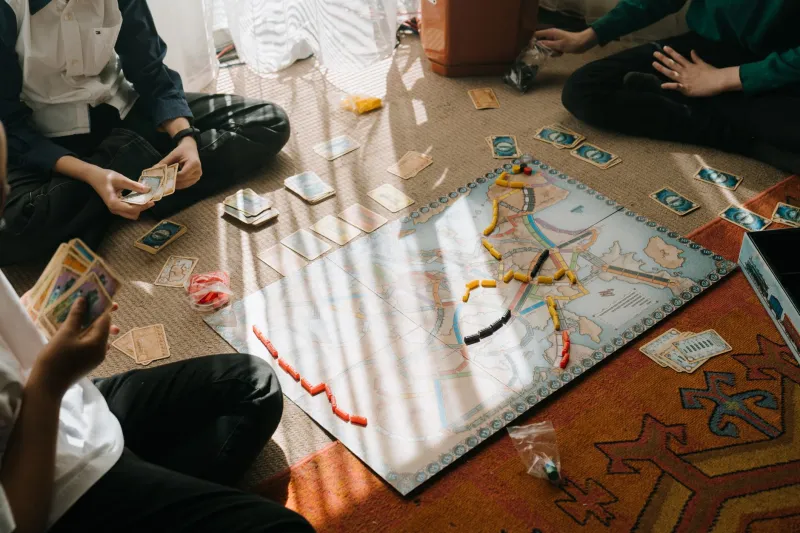
Here's a scene that probably sounds familiar: two kids are mid-game, things get heated over a disputed rule, someone flips a card, someone else goes quiet and sulky, and within about four minutes the whole thing has dissolved into chaos. Your instinct might be to step in, smooth it over, and get everyone back on track.
But here's the thing — that messy middle? That is the lesson.
When kids work through disagreements that come up naturally during play, they're not just learning how to finish a game. They're learning how to repair relationships, hold their ground without blowing things up, and genuinely hear someone else's point of view. And games — the kind with shared goals, shifting alliances, and built-in moments of tension — are one of the best environments on the planet for that kind of growth.
The Magic of 'Safe Failure Zones'
One of the reasons games work so well for social development is that they create what you might call a safe failure zone. The stakes are real enough to matter emotionally — nobody wants to lose, nobody wants to feel cheated — but low enough that a rupture doesn't have lasting consequences. A falling-out during a round of Uno is recoverable in a way that a fight over something genuinely important might not be.
This matters more than it sounds. Kids need repetition to build social skills, the same way they need repetition to learn to read. When a game creates a conflict, gets resolved, and then resets for the next round, kids are essentially running laps on skills like apologizing, compromising, and rebuilding trust. They get dozens of reps in a single afternoon.
Adult-led friendship lessons — the kind where a grown-up sits kids down and explains empathy — just can't replicate that. You can tell a child what it means to consider someone else's feelings all day long. But having them experience the moment when their friend's face falls after they gloat about winning? That lands differently.
Games That Actually Do the Work
Not every game creates these moments equally. The ones that tend to produce the richest social learning share a few key features.
Cooperative games are the most obvious example. Games like Forbidden Island, Outfoxed!, or even simpler backyard challenges where a group has to accomplish something together — cross an imaginary lava field using only cardboard squares, for instance — require kids to communicate goals, divide responsibilities, and deal with it when someone's idea doesn't pan out. When the whole team loses because one player made a risky call, the debrief that follows is genuinely valuable. Who gets to make decisions? How do we handle it when someone messes up? What do we do differently next time?
Negotiation-based games are a little trickier but incredibly effective. Games like Catan Junior or even simple trading card games ask kids to figure out what they want, what someone else wants, and how to find middle ground. That's a sophisticated skill set. Kids who practice negotiating in low-pressure game environments tend to be better at advocating for themselves in real-life situations — without bulldozing other people to do it.
Rule-invention games — where kids make up their own games or modify existing ones — might be the most underrated option. When a group of kids decides to invent a new version of tag or create their own card game from scratch, the entire process is a negotiation. Every rule has to be agreed on. Disagreements about fairness have to get resolved before the game can even start. It's messy and slow, but the social muscle-building happening underneath is remarkable.
What Happens When Things Fall Apart
The moment a game breaks down — someone accuses someone else of cheating, feelings get hurt, a player quits in frustration — is actually the most important moment in the whole experience. It's uncomfortable to watch, especially if your kid is the one crying or the one who caused the tears. But resist the urge to immediately fix it.
Kids who are given space to navigate that rupture on their own (with a watchful adult nearby, not hovering) learn things they simply cannot learn any other way. They figure out that friendships can survive conflict. They discover that an apology, even an awkward one, can change the whole temperature of a situation. They learn that sometimes you have to give a little to get the game — and the friendship — back.
If kids are genuinely stuck and the situation is escalating, a light-touch prompt can help. Something like, "What do you think would make this feel fair to everyone?" puts the problem-solving back in their hands without taking it over. It signals that you trust them to figure it out.
The Empathy That Sneaks In Through the Side Door
One of the quieter things that happens during collaborative and negotiation-based games is perspective-taking. When you're playing a cooperative game and your teammate makes a move you think is wrong, you have to at least consider what they were thinking. When a negotiation falls apart, you start to wonder what the other person actually wanted.
This is empathy, and it's arriving through the side door — not through a lesson about feelings, but through the practical necessity of understanding someone else's logic in order to keep playing.
Research in child development consistently points to play as one of the primary ways kids develop theory of mind — the ability to understand that other people have thoughts, feelings, and motivations that are different from their own. Games that require communication and shared decision-making accelerate that development in ways that are hard to engineer otherwise.
Setting the Stage at Home
You don't need a lot to create these opportunities. A handful of cooperative board games, a backyard, or even just a rainy afternoon with a pile of index cards and a prompt to "invent a game" can do the trick. The key is choosing games that require kids to talk to each other — not just take turns in silence.
It also helps to normalize the messy parts. If your kid comes to you frustrated after a game fell apart, try asking what happened before jumping to solutions. Let them tell the story. Ask what they think they might do differently. Treat the conflict as interesting rather than alarming.
Because honestly? The kids who learn to work through the hard moments in a game are building exactly the skills they'll need to work through the hard moments in a friendship, a classroom, and eventually a workplace. And they're doing it while having fun, which — if you ask us — is kind of the whole point.