Why We Should Stop Rescuing Kids From Boredom (And What to Do Instead)
Somewhere along the way, boredom became a parenting emergency.
A kid says "I'm bored" and within sixty seconds, a screen appears, a suggestion is made, a snack is offered. We fill the gap so fast that the gap never really gets a chance to exist. And honestly, it makes sense—we want our kids to be happy, we have stuff to get done, and handing over a tablet is just easier in the moment.
But here's the uncomfortable truth a lot of child development researchers have been sitting with for a while now: all that gap-filling might actually be working against us. And more importantly, against our kids.
Boredom Has a Bad PR Problem
We treat boredom like a malfunction. Like something went wrong and needs to be fixed immediately. But restlessness, quiet discomfort, the low hum of having nothing particular to do—these aren't signs that something is broken. They're actually the conditions under which some of the most important mental work happens.
Neuroscientists have a name for what happens in the brain during unstructured, low-stimulation moments: the default mode network kicks in. This is the brain's background processing system—the one that handles creative thinking, self-reflection, memory consolidation, and the kind of imaginative wandering that can't really happen when we're actively focused on a task or screen.
In other words, when your kid is staring at the ceiling looking deeply unimpressed with life, their brain is probably doing something genuinely useful. They just don't know it yet. And neither do we, because we usually interrupt it before it gets anywhere interesting.
What 'Boredom-Free' Parenting Is Actually Costing Us
This is the part that stings a little, so fair warning.
When we consistently rescue kids from boredom, we're not just filling their time—we're sending a message. The message is: this feeling is bad, and you shouldn't have to sit with it. And kids, being the excellent learners they are, absorb that lesson thoroughly.
The result? A generation of kids who are increasingly uncomfortable with any moment of internal quiet. Who reach for stimulation reflexively, not because they're curious or engaged, but because stillness feels unbearable. Who struggle to self-regulate, delay gratification, or tolerate frustration—all skills that are deeply connected to long-term mental health outcomes.
This isn't a judgment of any individual parent. It's a systemic pattern, and it's showing up in real ways: in rising rates of anxiety among school-age kids, in shorter attention spans, in the difficulty kids have entertaining themselves during unstructured recess time. We've optimized childhood for constant engagement, and something important got lost in the optimization.
What Kids Actually Need in Empty Moments
The goal isn't to make kids suffer through boredom for the sake of it. That's not the point. The point is to help them build a relationship with their own unstructured time—to discover that they can handle it, that things actually get interesting if they wait long enough, and that their own imagination is a pretty solid companion.
That's a skill. And it needs to be taught, or at least protected.
Here's what that looks like at different ages:
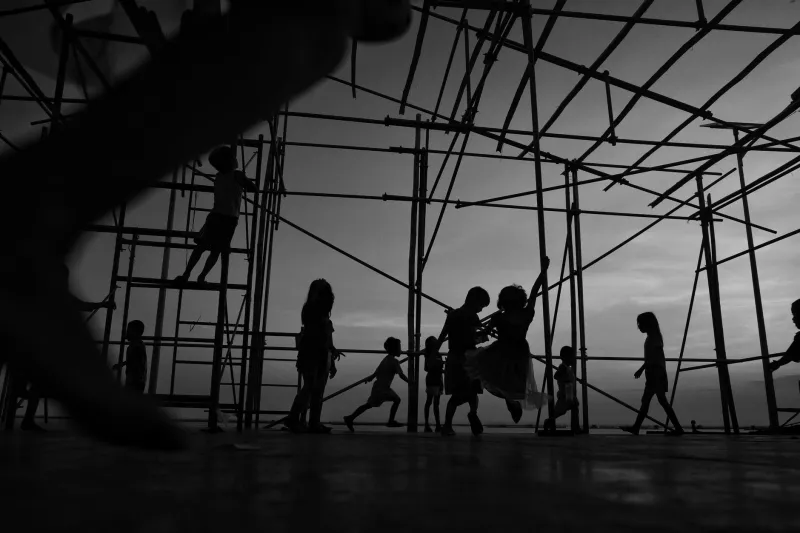
Ages 4–6: Little kids need short stretches of unstructured time with open-ended materials nearby—blocks, art supplies, dress-up clothes, cardboard boxes. They don't need you to direct the play. They need you to not direct it. Give them fifteen minutes and resist the urge to suggest anything. You might hear some whining at the start. Keep reading your book.
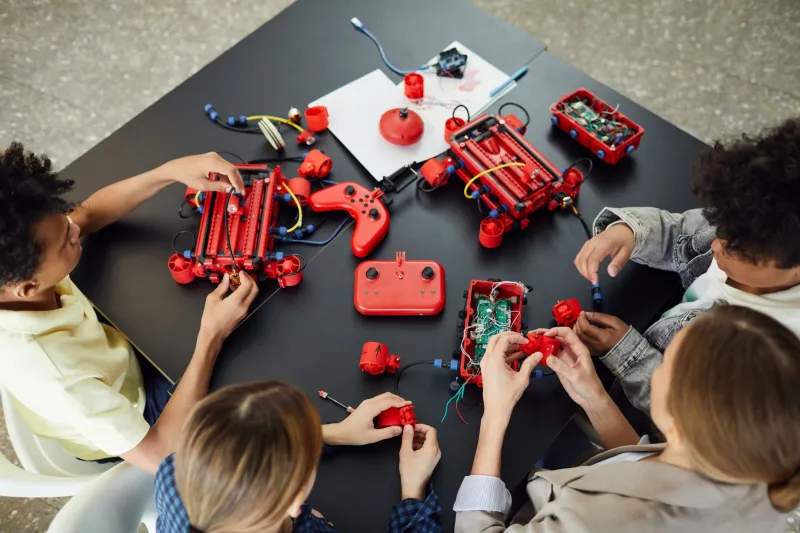
Ages 7–9: Kids in this range can handle longer stretches, but they often need a gentle runway. Instead of saying "go entertain yourself," try "you've got an hour with nothing on the schedule—see what you come up with." Framing it as an open opportunity rather than an absence of something tends to land better. Have some loose materials around—paper, tape, random craft supplies—but don't make suggestions.
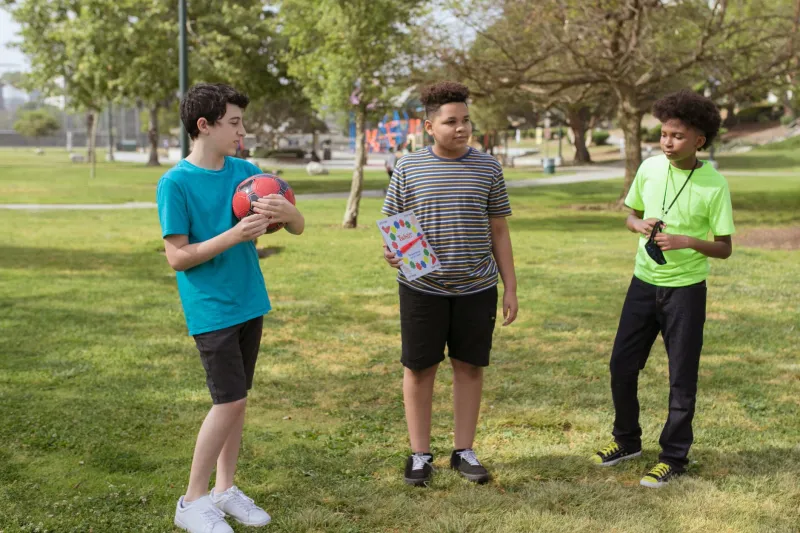
Ages 10–12: Tweens are often the most resistant to boredom because they're also the most socially wired. Boredom at this age can feel like loneliness, and that's worth acknowledging. But this is also the age where journaling, creative projects, building things, or even just lying in the grass and thinking can become genuinely meaningful habits—if they're given the space to discover that on their own.
How to Coach Without Rescuing
There's a difference between letting your kid flounder and leaving them to figure everything out alone. You can be a quiet presence in this process without taking it over.
When your child comes to you with "I'm bored," try not to immediately solve it. Instead, reflect it back: "Yeah, it's a slow afternoon. What do you feel like doing?" If they say "I don't know," that's fine. That's actually the beginning of the process. You can say, "Sit with it for a few minutes—something usually comes up."
And then wait. It might take longer than feels comfortable. That's okay.
What you're doing in that moment isn't being unhelpful. You're communicating something really important: I trust you to figure this out. That trust—repeated over time, in small moments—is how kids build the internal confidence to manage discomfort without needing an external rescue.
The Bigger Idea
At Emily's Playground, we believe deeply that kids are capable of more than we often give them credit for. That includes the capacity to sit with a quiet afternoon and make something out of it—a game, a daydream, a drawing, a plan, or just a few minutes of genuine rest.
Boredom isn't a problem to be solved. It's a space to be inhabited. And when we give kids permission to actually live in that space for a while, without rushing to fill it, we're handing them something that no app or activity can replicate: the experience of being okay with themselves, exactly as they are, with nothing going on at all.
That's not nothing. That's everything.