The Friendship Secret Nobody Talks About: Why Kids Need Boring Time Together
Here's a scene most parents know well: you've planned the perfect playdate. Snacks are ready. A craft is set up on the table. There's a movie queued for later. Everything is organized, and you're feeling pretty good about it.
And then, somewhere around hour two, the craft is abandoned, the snacks are gone, and the kids are just... lying on the floor. Doing nothing in particular. Maybe arguing about something small. Maybe making weird noises at each other. Maybe slowly, inexplicably, starting to build something out of couch cushions for no clear reason.
Your instinct might be to intervene, redirect, or pull out the movie early. But what if that chaotic, structureless stretch is actually the most valuable part of the whole afternoon?
What Happens When the Plan Runs Out
There's a specific kind of magic that happens when a group of kids runs out of things to do. Nobody's in charge. There's no activity to follow. The adults have stepped back. And suddenly, the kids have to figure out something that sounds simple but is genuinely complex: how to be together.
That process—negotiating what to do, who leads, whose idea wins, how to handle the kid who doesn't want to play along—is one of the richest social learning experiences childhood has to offer. And it almost never happens when every moment is planned.
Researchers who study children's peer relationships have noted for decades that unstructured peer time produces a different quality of interaction than adult-directed play. Kids take more social risks. They develop shared languages and inside jokes. They figure out how to repair small conflicts without a referee. These aren't just nice-to-haves—they're the building blocks of genuine friendship.
The Skills That Only Boredom Can Teach
Let's get specific, because this isn't just vague 'good for them' territory. When kids are bored together, several distinct things start to happen.
Negotiation becomes necessary. When there's a structured game, the rules handle most disagreements. When there's nothing, kids have to invent the rules—and agree on them. That process is messy and sometimes loud, but it's also incredibly instructive. Who makes the first suggestion? Who compromises? Who digs in? Kids are learning to read each other and adjust in real time.
Natural leadership emerges. Not the assigned kind, where a well-meaning adult makes one kid the 'line leader.' The organic kind, where someone has an idea compelling enough that others want to follow it. Sometimes that's the loudest kid. Sometimes it's the quietest one who's been watching everyone else. Either way, kids learn both how to lead and how to follow—skills that don't develop when an adult is running the show.
Conflict resolution gets real practice. Small arguments are going to happen. Someone's going to feel left out. Someone's going to change the rules mid-game. When adults are hovering nearby ready to intervene, kids outsource the resolution. When they're on their own, they have to actually work through it—and more often than you'd expect, they do.
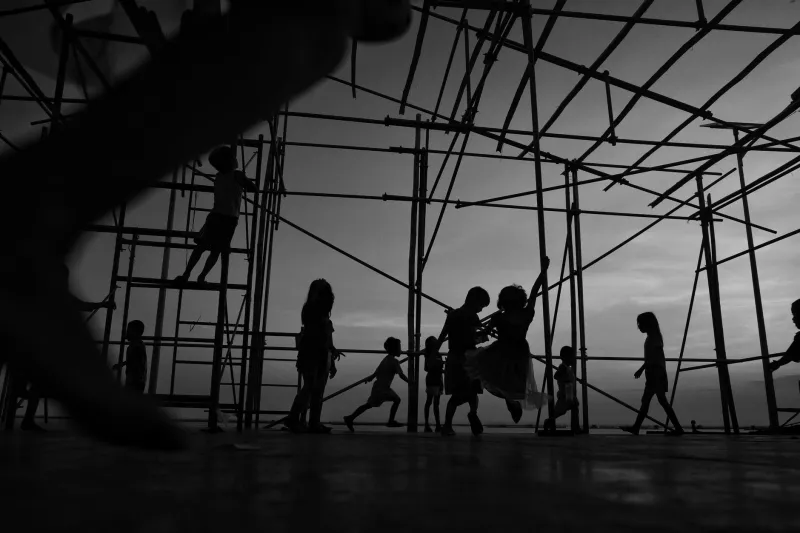
Shared imagination gets built. Some of the most elaborate, creative play kids engage in starts from a place of 'I'm bored.' The couch cushion fort. The backyard world with its own geography and rules. The game that has seventeen steps and only makes sense to the kids who invented it. These shared imaginative spaces are also shared emotional spaces—and they're the foundation of close friendship.
Why Organized Playdates Have Limits
Organized playdates aren't bad. They're a great way to help kids with social anxiety get comfortable, to introduce new friendships, or to give kids who struggle with unstructured time some scaffolding. No shade to the craft table.
But if every hangout has an agenda, kids never get the chance to discover what they genuinely enjoy about each other. They're always relating through an activity rather than to each other directly. That's a subtle but real difference.
Think about your own adult friendships. The ones that feel deepest probably aren't built on organized activities. They're built on lazy Sunday afternoons, long car rides, sitting around talking about nothing in particular. Kids need that, too—and they need it at an age when the social muscles are still forming.
What This Looks Like in Practice
So how do you actually create space for productive boredom in a group setting? A few ideas:
Build in a 'nothing' window. When kids come over, plan the first hour and then consciously step back. Don't fill the second hour. See what happens. You might be surprised how quickly they find their footing.
Resist the rescue reflex. When the 'I'm bored' chorus starts up, try a gentle 'I bet you'll figure something out' before jumping in with suggestions. Give them a few minutes to sit in the discomfort. That discomfort is productive.
Keep the entertainment low. Fewer screens, fewer structured toys, fewer activities with predetermined outcomes. Open-ended materials—cardboard, outdoor space, art supplies without instructions—give kids something to react to without telling them what to do.
Stay nearby but invisible. You don't need to disappear entirely. Being in the next room, available if something goes genuinely sideways, is different from hovering. Kids behave differently—more freely, more creatively—when they feel unsupervised even if they're technically not.
A Note on Group Size
One thing worth mentioning: group size matters here. Two kids left to their own devices will find a rhythm relatively quickly. Three is where it gets interesting—and where the social dynamics get genuinely complex. Someone often ends up feeling like the odd one out, at least temporarily. That's uncomfortable, and it's also deeply educational.
If you have a group of three and you notice some shifting alliances or hurt feelings, that's not necessarily a sign that something's wrong. It might be a sign that something important is happening. Check in gently, but don't solve it for them unless you really need to.
The Friendships That Stick
Ask most adults about their closest childhood friendships and they won't describe a specific playdate activity. They'll describe a feeling—of belonging, of being known, of having their own little world with someone else. That feeling doesn't come from crafts or organized games. It comes from the slow, unscripted hours when kids figure out who they are to each other.
That's what you're protecting when you resist filling every moment. Not boredom for its own sake, but the conditions under which real connection gets made. And in the long run? That's worth a lot more than any planned activity you could put on the schedule.