Your 'Picky' Kid Isn't Being Difficult—They're Actually Paying Attention
You set out the finger paints. Every other kid at the table dives in immediately, hands smearing color across paper like they were born for this moment. Your child? They're staring at the jar like it personally wronged them. They want to paint—you can see it in their eyes—but something about touching that gooey, cold, unpredictable stuff is just... a lot.
So you hear yourself say the word. Picky.
It's such a small word, but it carries a lot of weight. And for a lot of kids, it's also not quite accurate.
What's Actually Going On in That Little Brain
Sensory processing is the way our nervous systems take in and make sense of information from the world—textures, temperatures, sounds, tastes, smells, movement. For most people, this happens in the background, automatically, without much drama.
For some kids, though, the volume is turned up. Sensory input hits differently—more intensely, more persistently, sometimes even uncomfortably. This isn't a behavior problem or a phase they'll just "grow out of." It's a genuine neurological difference in how their brain interprets the world.
When a child refuses to touch slime, won't eat anything with a mushy texture, or loses it when their socks feel wrong, they're not performing. They're responding to real signals their nervous system is sending. Calling that "picky" misses the point entirely—and can make kids feel like something is wrong with them when actually, they're just wired to notice more.
Sensitivity vs. Avoidance: There's a Difference
Not all sensory caution looks the same, and it helps to know what you're actually seeing.
Sensory sensitivity means a child notices and reacts strongly to input that others might barely register. They might startle easily, dislike certain fabrics, or be very particular about food temperature. But with patience and the right approach, they can often engage—on their own terms and timeline.
Sensory avoidance is more intense. The child doesn't just prefer to skip the finger paint—they become genuinely distressed at the idea of it. This level of response might be worth a conversation with a pediatrician or occupational therapist, especially if it's affecting daily life in significant ways.
Most kids who get labeled "picky" fall somewhere in the sensitivity range. They're not avoiding the world—they're just approaching it more carefully. And honestly? That's a kind of attentiveness worth respecting.
Reframe Before You Redirect
Language matters here more than we might think. When kids hear "picky" or "dramatic" attached to their sensory reactions, they start to internalize the idea that their responses are wrong. That's a rough thing to carry around.
Try swapping in different words. "You notice things really carefully" lands very differently than "you're being so picky." So does "This texture feels like a lot right now—let's figure out what works for you." These aren't just feel-good phrases—they're actually more accurate descriptions of what's happening, and they keep the door open for curiosity instead of shutting it with judgment.
Playful Experiments to Try at Home
If your child has strong sensory preferences, the goal isn't to bulldoze through them—it's to slowly, playfully expand what feels okay. Think of it like gently widening a comfort zone, not blowing it up.
Here are a few low-pressure ways to experiment:
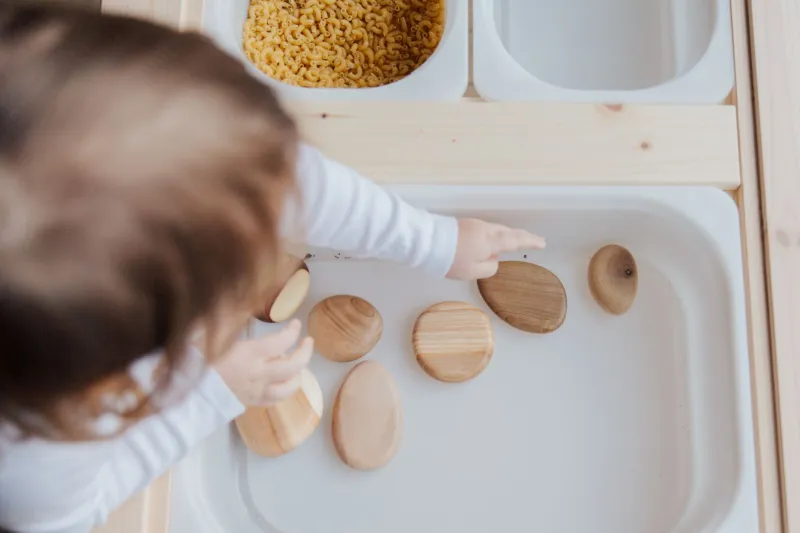
The texture tray. Set out a muffin tin with small amounts of different materials—dry rice, wet sand, cotton balls, smooth pebbles, dried pasta. Invite your child to touch (or not touch) each one and describe what they notice. No pressure to like everything. The goal is just exploration and language-building. You might be surprised what they're willing to try when nobody's watching them for a reaction.
Tools as middlemen. If direct touch is a hard no, offer tools. Paintbrushes instead of fingers. Tongs instead of hands. A spoon to stir the slime. This gives kids a way to participate without the sensory input being overwhelming—and often, over time, they'll inch closer on their own.
The "just a tiny bit" taste test. For food textures, make it a game. A pea-sized amount on the tip of a fork, no strings attached. They can taste and spit it out if they want. They can just smell it. They can touch it and put it down. Removing the expectation that they have to eat it takes the power struggle out of the equation.
Sensory bins with themes. Build a sensory bin around something your child already loves. Dinosaur fan? Bury small plastic dinos in kinetic sand. Into space? Hide star-shaped gems in dark-colored rice. The motivating theme can make the unfamiliar material feel worth engaging with.
When to Loop in a Pro
Some kids benefit enormously from working with a pediatric occupational therapist who specializes in sensory processing. If your child's sensory reactions are frequent, intense, and getting in the way of things like eating, sleeping, dressing, or participating in activities they want to enjoy, it's worth a conversation with your pediatrician.
This isn't about labeling or diagnosing—it's about getting your kid the right tools so they can access more of the world with less distress.
The Bigger Picture
At Emily's Playground, we talk a lot about how kids learn through play—and sensory play is some of the richest learning there is. When we give kids space to explore materials at their own pace, without judgment, we're not just teaching them about textures. We're teaching them that their instincts are valid, that they have agency over their own bodies, and that curiosity is always more useful than shame.
Your picky kid isn't broken. They're paying very close attention. That's actually a pretty great place to start.