Why the Best Play Spaces Have Less in Them (And How to Design One That Actually Works)
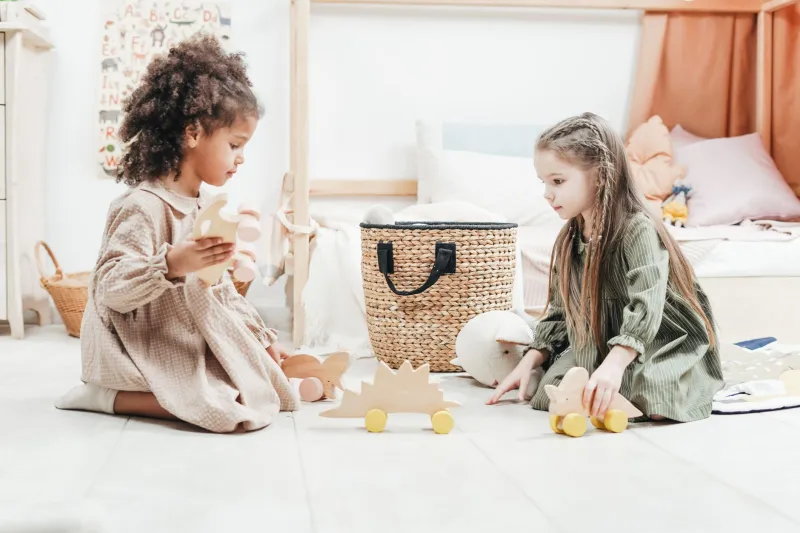
Here's a scene most parents know well: You've just reorganized the playroom. Every toy is visible, every bin is labeled, the shelves look like a Pinterest board come to life. Your kid walks in, scans the room for thirty seconds, and announces they're bored.
Frustrating? Absolutely. But also kind of fascinating — because it tells us something really important about how kids' brains work when it comes to play.
The truth is, a perfectly stocked, fully organized play space can actually kill creativity. When everything is available, nothing is interesting. When every toy has a clear purpose, there's no room for invention. And when the environment does all the work, kids have very little left to do themselves.
The good news? You don't need to spend more money or rethink your entire home. You just need to think a little differently about what a great play space is actually supposed to do.
The Psychology Behind Play Environments
Researchers who study children's play have long noted that the physical environment isn't just a backdrop — it's an active participant. The concept of "affordances," first introduced by psychologist James Gibson and later applied to child development, refers to the action possibilities that an environment naturally suggests. A cardboard box affords climbing, hiding, decorating, and pretending. A finished toy race track affords one thing: racing cars.
When play spaces are filled with toys that have a single, obvious use, kids burn through them quickly. They do the thing the toy was designed for, feel the brief satisfaction of completion, and then move on — often to you, asking what to do next. But spaces designed around open-ended potential keep kids orbiting longer, because the "answer" to the space isn't immediately obvious. They have to figure it out. And that figuring-out process? That's where the real developmental magic happens.
Start by Removing, Not Adding
Counter-intuitive as it sounds, the first step in building a better play space is subtraction. Too many choices create cognitive overload in young kids. When there are forty options in front of them, the mental work of choosing actually exhausts them before play even starts.
Try pulling out about two-thirds of what's currently in your play area. Rotate items on a loose schedule — every week or two — so that returning toys feel fresh and interesting again. Store the rest out of sight. You'll likely find that your kid plays longer, more deeply, and with more focus when there's simply less to sort through.
This also applies to "complete" toys — the ones with defined outcomes, like branded playsets, character figures tied to specific storylines, or electronic games that respond for the child. These aren't bad, but they crowd out the mental space needed for imagination. Thinning them out makes room for the kind of play that kids actually drive themselves.
What to Keep (and What to Add)
So what makes the cut? Think in terms of materials and objects that suggest without prescribing.
Loose parts are a cornerstone of great play spaces. These are simple, movable, unrelated objects — think wooden blocks, river stones, empty spools, fabric scraps, cardboard tubes, corks, or shells. They have no single correct use, which means kids have to invent one. Loose parts work across age groups and can be combined in endless ways, making them consistently engaging in a way that finished toys rarely are.
Open-ended art supplies also pull serious weight. Blank paper, tape, scissors, paint, clay, and markers give kids the raw material for expression without telling them what to express. Keep these accessible — not locked in a cabinet that requires adult help — so kids can grab them independently when inspiration strikes.
Fabric and draping materials deserve a special mention. A few old sheets, scarves, or pieces of felt can become capes, tents, rivers, or stage curtains within minutes. They're cheap, easy to store, and endlessly reimaginable.
Building materials beyond standard blocks are worth exploring too. Magnetic tiles, wooden planks, large foam pieces, and even cardboard boxes give kids the structural challenge of figuring out how things connect and hold — a quietly powerful engineering workout.
Color and Sensory Environment Matter More Than You Think
The visual environment of a play space sends signals to kids' brains about what kind of activity is expected there. Loud, primary-color-saturated rooms with lots of visual noise tend to amp kids up and shorten attention spans. Softer, more neutral tones — creams, muted greens, warm wood tones — tend to have a calming effect that actually supports deeper, more sustained play.
This doesn't mean your play space needs to look like a Scandinavian design catalog. But it's worth being intentional. If the walls are bright red and every toy is neon, don't be surprised if energy runs high and focus runs low.
Natural light is another underrated factor. Spaces with good daylight exposure tend to feel more inviting and alive. If you can position a play area near a window, do it. Even watching light shift across the floor or casting shadows can become part of the play.
Texture matters, too. Mixing soft rugs with hard surfaces, smooth materials with rough ones, gives kids sensory variation that naturally encourages exploration. A small sensory bin — filled with kinetic sand, dried beans, or water beads — can anchor a corner of the room and become a reliable go-to for kids who need to regulate their energy.
Build In Nooks and Partial Enclosures
Kids are drawn to small, semi-enclosed spaces in a way that's almost instinctual. Child development researchers call this "cozy corner" effect — kids feel safer, calmer, and more imaginatively free when they have a defined space that feels a little bit theirs.
You don't need a built-in reading loft (though hey, if you've got the space). A tent, a canopy draped over a bookshelf, a large cardboard box with a door cut out, or even a low table with a blanket over it can create that sense of a private world. These spots tend to become hubs of imaginative play — kids tell elaborate stories there, build entire fictional worlds, and return to them day after day.
The One Rule That Ties It All Together
All of these design principles share a common thread: they shift the role of the environment from entertainer to invitation. A well-designed play space doesn't do the playing for kids — it creates the conditions where kids want to play, and then gets out of the way.
That means resisting the urge to make the space too perfect, too complete, or too finished. Leave some open floor space with nothing on it. Keep a few shelves intentionally empty. Let a pile of cardboard boxes sit in the corner without explaining what they're for.
The gap between "here's a bunch of stuff" and "here's what you do with it" is exactly where creativity lives. Your job as a parent or caregiver isn't to fill that gap — it's to protect it.
When you design a space that trusts kids to figure things out, something pretty wonderful happens: they do.