The Art of Watching: Why Simply Observing Your Child at Play Is Good for Both of You
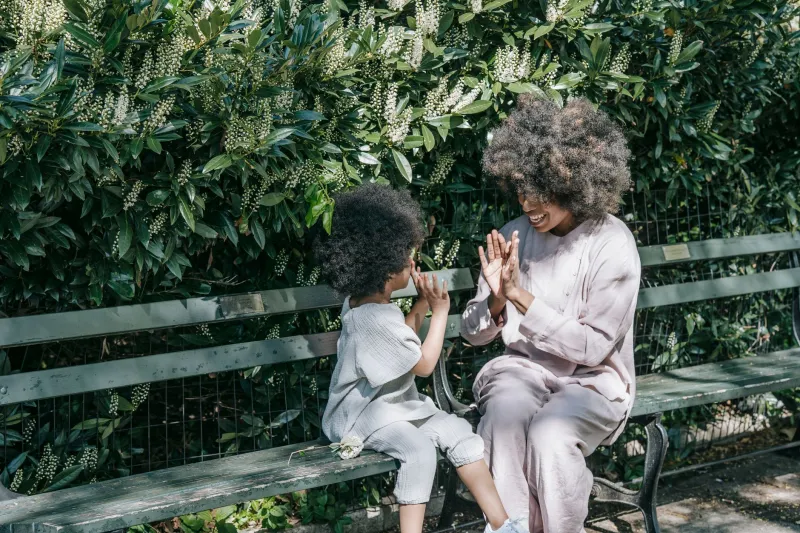
Let's paint a picture. Your kid is outside, deep in some elaborate game that makes complete sense to them and approximately zero sense to you. You're sitting nearby—maybe on the back porch steps, maybe on a park bench—and you're just... watching.
No phone. No agenda. No gentle suggestions about how the game could go differently. Just you, watching them do their thing.
For a lot of parents, this scenario sounds either wonderfully peaceful or faintly anxiety-inducing. If you're in the second camp, you're not alone—and this piece is especially for you.
Why Watching Feels So Hard
Modern parenting culture has a complicated relationship with observation. We've been trained, in subtle and not-so-subtle ways, to be active parents. Engaged. Facilitative. On the floor with the blocks, narrating the play, asking open-ended questions. All of that has its place. But it's created a kind of background guilt that kicks in the moment we step back and just... look.
There's a voice that says: Is this lazy? Should I be doing more? Is she okay? Should I jump in?
That voice, well-intentioned as it is, often pulls us out of what could be a genuinely nourishing experience—for us and for our kids.
What Happens in Your Brain When You Watch Without Intervening
Here's something worth knowing: simply observing something you care about, without trying to control or improve it, is actually a mindfulness practice. And mindfulness, as roughly ten thousand studies have confirmed, reduces anxiety, improves mood, and increases the sense of presence and connection.
When you watch your child play with genuine attention—not evaluative attention, just open attention—you're doing something your nervous system rarely gets to do. You're not problem-solving. You're not managing. You're not anticipating the next thing on the to-do list. You're just here, watching something unfold.
Parents who build this kind of observation into their regular routine report something interesting: they feel less anxious about their kids overall. Not because they've gathered more information to reassure themselves, but because they've actually seen their child—seen them navigate challenges, bounce back from frustration, invent solutions, and generally demonstrate that they're more capable than the worried parental brain tends to believe.
There's a recalibration that happens. And it's good for everyone.
What It Does for Your Kid
This is the part that tends to surprise people: being watched—really watched, with warmth and without judgment—is something children actively need.
Developmental psychologists talk about the concept of "witnessed self," the sense a child develops that their inner experience is visible to and valued by the important people in their lives. When a child looks up from their game and catches a parent watching them with a smile—not to correct, not to redirect, just to see them—something important gets confirmed: I am interesting. I am worth watching. I don't have to perform to deserve attention.
This is subtly but meaningfully different from the attention kids get when they've accomplished something. That kind of attention ("Great job!" "Look at you go!") is tied to achievement. The attention that comes from simply being observed is unconditional. It says: you, as you are, right now, are enough.
Over time, kids who regularly experience this kind of presence from their parents tend to develop stronger self-confidence and a more stable sense of identity. They're less dependent on external validation because they've already received something better: being truly seen.
The Difference Between Watching and Hovering
It's worth making this distinction clearly, because they can look similar from the outside but feel very different to a child.
Hovering is anxious observation. It's watching for problems. It's the parent who's physically present but mentally running a risk assessment—scanning for danger, preparing to intervene, silently evaluating whether the play is going okay. Kids can feel this energy, and it actually increases their own anxiety. It communicates: I'm not sure you can handle this.
Witnessing is relaxed observation. It's watching with genuine curiosity and warmth. It's the parent who's present without an agenda, who lets the play unfold without needing to steer it. This energy communicates something entirely different: I trust you. I'm here. I'm enjoying watching you be you.
The shift from hovering to witnessing is mostly internal, but it's significant. And it's a skill you can practice.
A Practical Guide to Shifting Into Witness Mode
If you want to try this—and we think you should—here are some concrete ways to make the transition from manager to observer:
Start with a time limit. Give yourself fifteen minutes of pure observation. No phone, no book, no task running in the background. Just watch. See what you notice.
Get comfortable. Bring a cup of coffee to the porch. Sit on the bleachers at the park. Make the physical setup pleasant enough that you're not itching to leave after five minutes.
Notice your urges—and don't act on them. You'll feel the pull to offer a suggestion, solve a problem, or jump in when something goes sideways. Notice that pull. Let it pass. See what your kid does without your help.
Watch for the small stuff. The way your kid talks to themselves when they think no one's listening. The look on their face when they figure something out. The way they recover after a frustration. This is the stuff you miss when you're in facilitating mode.
Let them catch you watching. Don't hide it. When your child looks up and sees you watching them with a genuine smile, hold that moment. Let them feel seen. That two-second exchange does more than you'd think.
Debrief later—lightly. You don't need to make a big production of it, but a simple "I really loved watching you build that today" goes a long way. It confirms that their play mattered to you, without turning it into a performance review.
Reclaiming the Sideline
At Emily's Playground, we spend a lot of time thinking about what kids need to thrive—and a big part of that is space to be themselves without constant adult input. But the sideline isn't just good for kids. It's good for parents too.
In a world that tells us to optimize every moment, there's something quietly radical about sitting on a park bench on a Tuesday afternoon and doing nothing but watching your kid dig in the dirt. It's not productive. It's not impressive. It doesn't make for a great Instagram caption.
But it might be one of the most connected, present, genuinely human things you do all week. For both of you.